
Stage Lighting for Worship: Why Skin Tone Accuracy Matters More Than Brightness
![[HERO] Stage Lighting for Worship: Why Skin Tone Accuracy Matters More Than Brightness](https://cdn.marblism.com/D_nWztaUkdm.webp)
So, you’re sitting in the back of the sanctuary on a Sunday morning, you pull up the church livestream on your phone to check the feed, and, honestly?, the Pastor looks like a ghost. Or maybe a zombie. Or perhaps he’s sporting a tan that looks more like a neon orange hazard cone.
If you’ve spent any time at the tech booth, you’ve probably had this exact moment of realization. You look at the stage with your own eyes, and everything seems fine. But on that screen? It’s a total disaster. Your first instinct is probably to "fix it in post" or, more commonly, to just crank up the brightness.
"If we just had more light, surely they’d look better, right?"
Actually, no. In fact, just throwing more "brightness" at the problem is usually like trying to fix a bad paint job by putting on ten more layers of the wrong color. It just makes the problem louder.
Welcome to Part 1 of our series on lighting for worship. Today, we’re going to talk about why skin tone accuracy is the secret sauce your stage is missing, and why it matters way more than how many lumens your fixtures can pump out.
The "Brighter is Better" Trap
Let’s be real: most of us in smaller or more traditional churches are working with volunteers who have about twenty other things on their plates. When the lighting feels "dark," the easiest solution is to buy the brightest LED par we can find and aim it at the pulpit.
But here’s the reality check: High brightness without accurate color rendering actually worsens the appearance of skin tones.
Think of it this way. If you shine a massive, blindingly bright blue spotlight on someone, are they going to look "clearer"? No. They’re just going to look like a very bright Smurf. Brightness is just volume. If the quality of the light is bad, you’re just turning up the volume on a bad song.
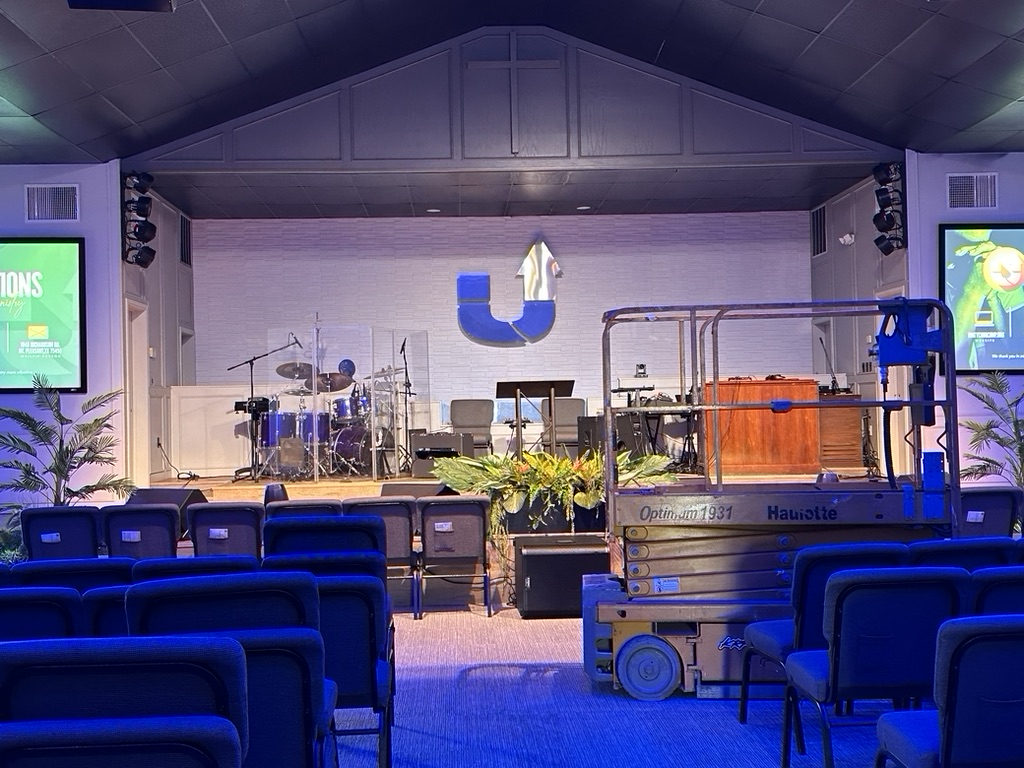
In many traditional sanctuaries, we’re dealing with beautiful wood tones, stained glass, and neutral carpets. When you hit a speaker with a cheap, "bright" LED that lacks the proper color spectrum, you strip away the natural warmth of the room, and the person standing in it.
What is CRI, and Why Should You Care?
You might have seen the letters CRI (Color Rendering Index) on a spec sheet and scrolled right past it. (Fair question: who has time for more acronyms?)
But CRI is actually the most important number on that page. It measures, on a scale of 1 to 100, how accurately a light source reveals the true colors of an object compared to natural sunlight.
- CRI 70-80: Standard for warehouses or streetlights. This is where the "zombie" look happens.
- CRI 90+: This is the "Gold Standard" for stage and video.
When a light has a low CRI, it’s literally missing parts of the color spectrum. Usually, it’s missing the "R9" value, which is red. Since human skin tones rely heavily on red and pink undertones to look healthy and "alive," a light without that spectrum makes people look gray, ashen, or sickly.
At SM Lights, we focus on high-CRI fixtures because we know that for a small church, you don’t have a professional makeup artist on staff to fix the Pastor’s complexion before every service. You need the light to do the heavy lifting for you.
Moving Beyond CRI: Meet TM-30
While CRI has been around since the 60s, there’s a newer, more accurate way the pros measure light called TM-30.
If CRI is like a simple pass/fail grade, TM-30 is like a full diagnostic report. It looks at "Fidelity" (how accurate the color is) and "Gamut" (how saturated the colors are). For worship environments, especially traditional ones where we want a sense of reverence and warmth, looking for fixtures that perform well in TM-30 testing ensures that the wood of your altar looks like wood, and your worship leader doesn't look like they’ve been lit by a fluorescent office bulb.
The Color Temperature Sweet Spot
The other half of the "accuracy" battle is Color Temperature, measured in Kelvins (K).
- 2800K - 3000K (Warm White): Think of an old-school incandescent light bulb. It’s cozy, but it can make things look a bit too orange or "muddy" on a livestream.
- 5600K (Daylight): This is very blue/cool. It’s bright, but it can feel sterile and clinical, almost like a hospital.
- 4000K (Neutral White): This is the "sweet spot" for most churches.
In a traditional sanctuary, 4000K provides a crisp, modern look that still feels natural to the eye and looks fantastic on camera. It prevents the "bronzed" look of warmer lights while avoiding the "cold blue" feel of higher temperatures.
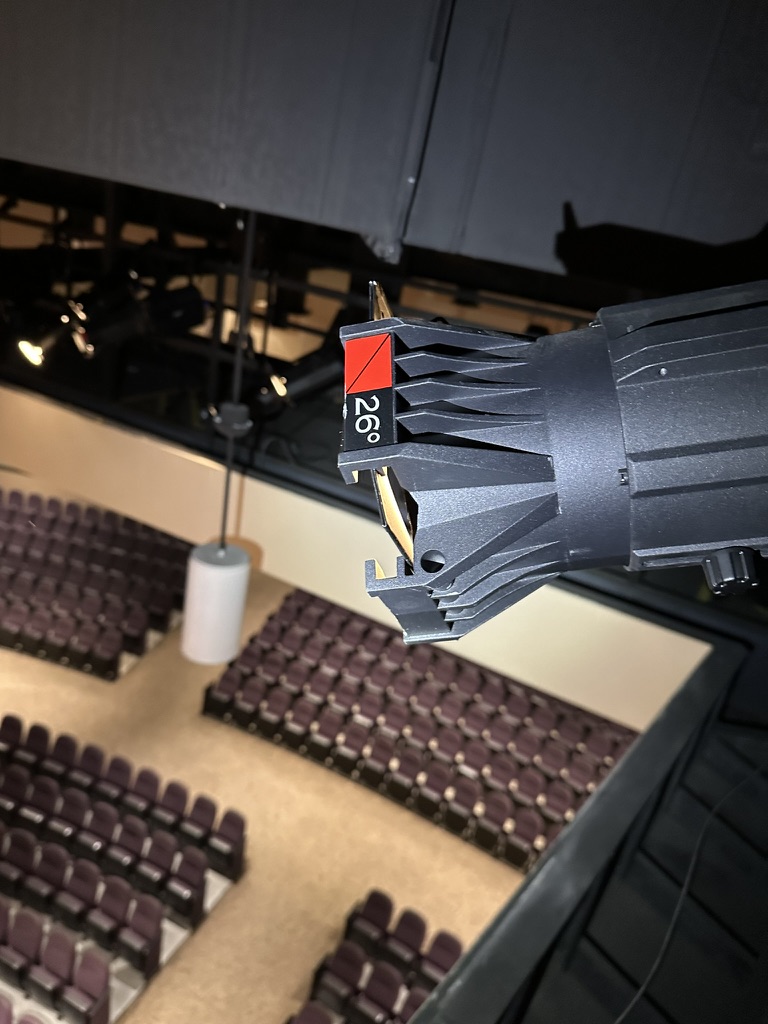
If you’re looking to upgrade your front wash, checking out something like the Pioneer Fresnel Series is a great place to start. A Fresnel (pronounced "fruh-NEL") gives you a soft, even beam that is much more forgiving for volunteers to aim than a sharp spotlight.
The Livestream Factor: Flicker-Free is Mandatory
If your church is like most, the livestream is no longer "optional", it’s your digital front door. This brings up a technical hurdle that didn't exist twenty years ago: LED Flicker.
Have you ever seen a livestream where the screen seems to be "strobing" or has weird horizontal lines moving through it? That’s not a camera problem; it’s a lighting problem. Cheap LEDs turn on and off thousands of times per second (Pulse Width Modulation). If that frequency doesn't match your camera's shutter speed, you get flicker.
All our stage lighting products are designed to be flicker-free. This means your volunteers don't have to spend hours on YouTube trying to figure out how to "sync" the camera to the lights. It just works.
Making it Easy for Volunteers
Let’s talk about your tech team. Chances are, they aren't professional lighting designers. They might be a high school student, a retired engineer, or a busy parent who stepped up to help.
The last thing they need is a lighting system that requires a PhD to operate. This is why we advocate for volunteer-friendly DMX control.
Whether you’re using a simple hardware fader wing or a software-based solution, the goal is "one-button" success. You want to be able to set your "Skin Tone Secret" (that perfect blend of high-CRI white light) and save it as a preset.
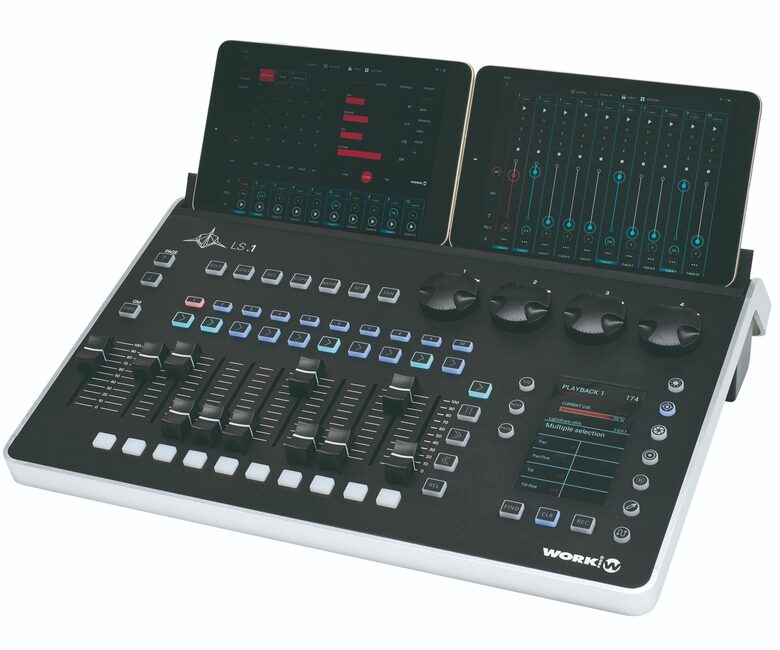 Caption: A LightShark LS-1 hardware lighting console—10 faders, encoders, and a built-in display—great for simple, volunteer-friendly control.
Why This Matters for Smaller Churches
You might think, "Well, we’re just a small church with 100 people. Does CRI really matter that much?"
Actually, it matters more for you.
A massive church with a million-dollar budget can hide bad lighting with huge LED walls, haze, and expensive post-production color grading. In a smaller, traditional church, you don’t have those distractions. The focus is entirely on the Word being spoken and the music being played. If the lighting is distracting or makes the speaker look unnatural, it creates a subtle barrier between the message and the congregation.
The SM Lights Difference: US-Based Support
We know that choosing the right fixtures for a traditional space can feel overwhelming. Should you go with a Pearl Wash for flexibility, or stick to a static front wash?
One of our biggest "Superpowers" is that we provide US-based pro support. You aren't just buying a box from a massive online retailer and hoping for the best. You’re getting a partner who understands that "Stage Lighting for Worship" is different from lighting a rock concert or a corporate ballroom.
We’re here to help you navigate the technical specs so you can focus on what really matters: the ministry.
Summary Checklist for Part 1:
- Prioritize CRI over Lumens: Look for 90+ CRI to ensure healthy skin tones.
- Target 4000K: It’s the most versatile color temperature for both in-person and video.
- Demand Flicker-Free: Protect your livestream from distracting strobing.
- Think "Soft": Use Fresnels or soft-edge washes for your front light to avoid harsh shadows on faces.
Ready to see how a professional front wash could change your sanctuary? Check out our Stage Lighting collection or reach out to our team at our support page.
Stay tuned for Part 2, where we’ll dive into the "RGBW Secret": why adding a dedicated White chip to your color-changing lights is a total game-changer for your worship team's look!