
The RGBW Secret: Why the 'White' Chip is Your Skin Tone's Best Friend
![[HERO] The RGBW Secret: Why the 'White' Chip is Your Skin Tone's Best Friend](https://cdn.marblism.com/qzjFMMq6DXd.webp)
Ever looked at your church livestream and wondered why the pastor looks slightly... purple? Or maybe a bit like a ghost who spent too much time under a neon sign? Honestly, it’s a common frustration. You’ve invested in new LED lights, you’ve got your volunteer team ready, and yet, the people on stage just don’t look "right" on camera.
If you’ve spent any time researching stage lighting, you’ve probably run into a wall of acronyms: RGB, RGBW, RGBA, RGBAL (yes, the alphabet soup is real). It can feel like learning a completely new language. But before you throw in the towel, let’s talk about the one "secret" that makes the biggest difference for your Sunday morning broadcast.
It all comes down to the "W."
In this second part of our Worship Lighting series (following up on our Magenta-themed kick-off!), we’re diving into the world of Cyan and color mixing. We’re going to look at why that dedicated white chip is actually your skin tone’s best friend. Let’s break it down.
The RGB Problem (And why it’s "Muddy")
First, let’s look at the basics. Most entry-level LED lights are RGB. This stands for Red, Green, and Blue. In theory, if you mix 100% of Red, Green, and Blue, you get white light.
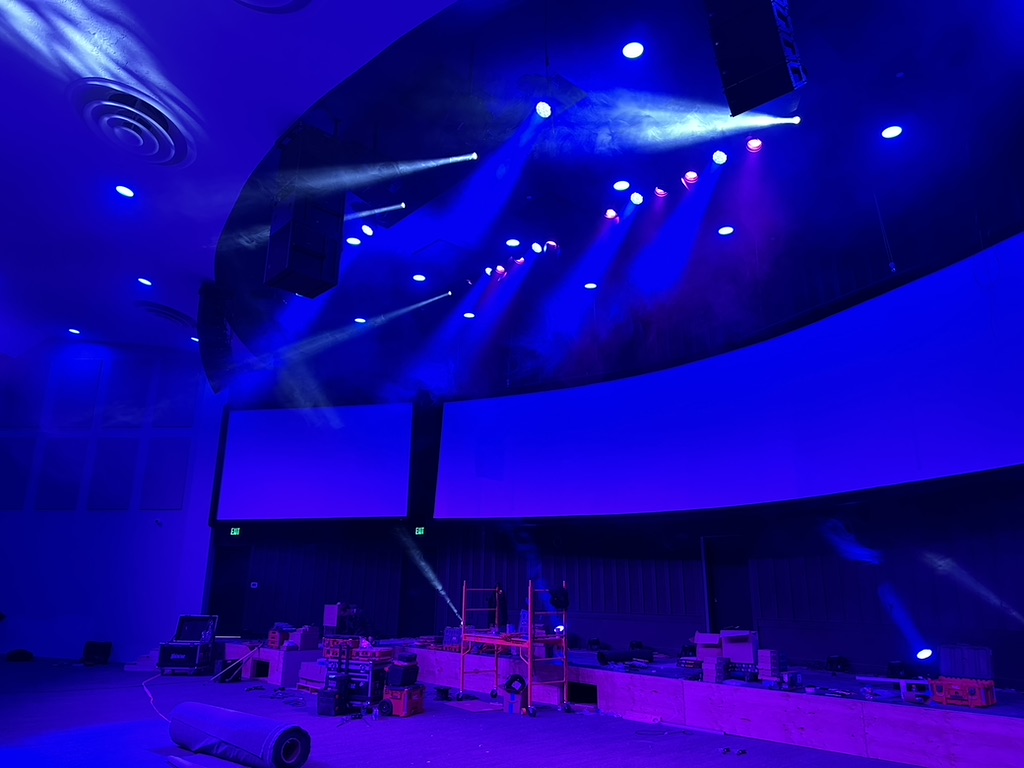
But here’s the reality check: "LED White" created by mixing red, green, and blue is rarely actually white. It’s usually a weird, muddy version of white that often has a distinct blue or pink tint. While it might look "okay-ish" to your eyes in the room, your camera sees it very differently.
Cameras are incredibly sensitive to color temperature. When you try to create a "white" wash using only RGB chips, you’re missing the full spectrum of light that makes human skin look healthy and natural. This is why people end up looking washed out or sickly on the livestream. You’re essentially hitting them with a cocktail of primary colors and hoping the camera can figure it out. (Spoiler: it usually can't.)
Enter the 'W': The Game Changer
This is where RGBW comes in. The "W" stands for a dedicated White chip. Instead of trying to "fake" white by mixing three other colors, the fixture has a chip specifically designed to produce pure, clean white light.
Think of it this way: mixing RGB to get white is like trying to make a specific shade of grey paint by mixing every color in your palette. It might work, but it’s going to be messy. Using an RGBW fixture is like having a fresh tube of high-quality white paint ready to go.
The dedicated white chip provides a foundation of "true" light that the RGB chips can then "tint" to perfection.
When you use the white chip as your primary source for front lighting (what we call a "front wash"), you get a much higher CRI (Color Rendering Index). In plain English, CRI is a measure of how accurately a light source reveals the true colors of an object: or in our case, a person’s face. High CRI means the pastor looks like a human being, not a hologram.
Why Your Camera Cares About RGBW
If you’re only lighting for the people in the room, you can sometimes get away with a lot. The human eye is amazing at adjusting to weird lighting. But if you’re livestreaming or recording your services, the camera is the ultimate truth-teller.
Cameras need a balanced spectrum of light to render skin tones accurately. When you use an RGBW fixture, you can dial in a "Warm White" or "Cool White" that complements different skin tones.
At SM Lights, we’ve seen so many churches struggle with "flicker" on their video feeds. This usually happens when cheaper fixtures use low-quality dimming methods. Our fixtures are designed to be flicker-free, which means they play nice with your high-definition cameras. When you combine flicker-free technology with the color accuracy of an RGBW chip, your livestream quality jumps up an order of magnitude instantly.
"But We Want Color!" (You can have both)
A common concern we hear is: "If we use white light, won't our stage look boring?"
Not at all! The beauty of RGBW is that you have the best of both worlds. You use the White chip to make sure the worship leader looks great, and then you use the Red, Green, and Blue chips to add a subtle "warmth" or a "cool" vibe to the scene.
For example, if you want a warm, inviting atmosphere for a ballad, you can keep your White chips at 70% and add in 20% Red and 10% Green (which makes a soft amber). Because you have that White foundation, the skin tones stay natural, but the environment feels warm.
Making it Easy for Volunteers
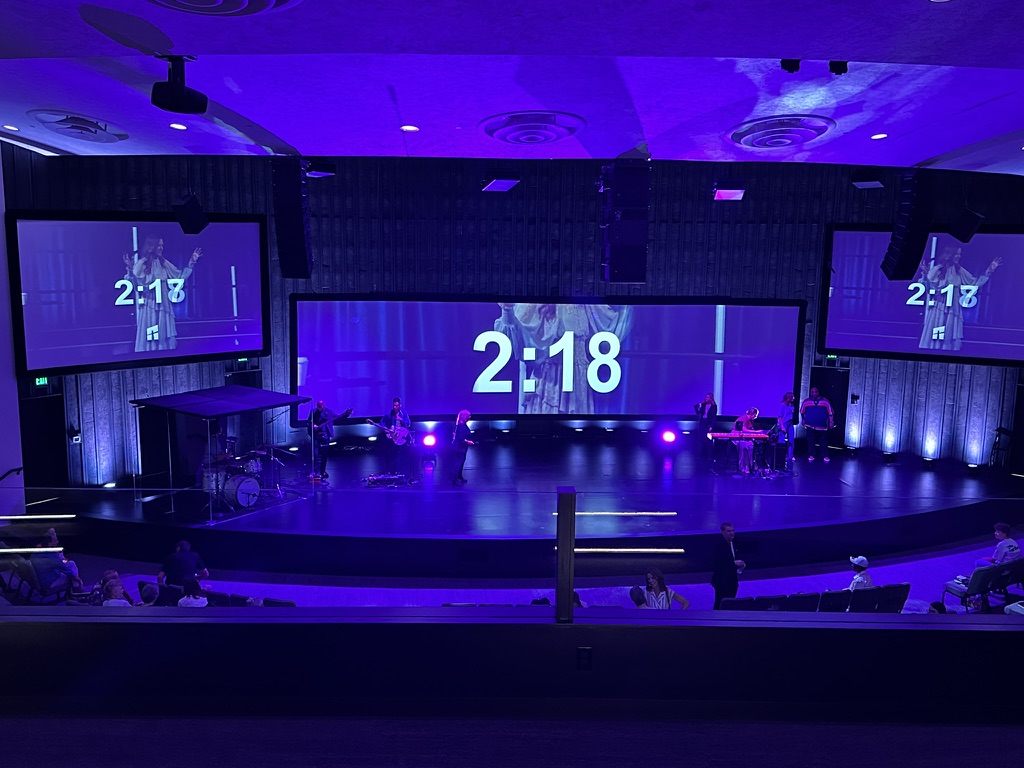
Let’s be honest: most of us aren't professional lighting designers with twenty years of experience. Most church tech teams are made up of incredible volunteers who have a few hours a week to make magic happen.
This is why we love the LightShark LS-1. When you’re working with RGBW fixtures, you want a controller that doesn't require a PhD to operate. The LS-1 makes it incredibly intuitive to manage these four "channels" of light. You can quickly adjust your front wash to ensure the "W" is doing its job, while keeping your creative colors on separate faders.

With a touchscreen interface and physical faders, your volunteers can "see" what they’re doing. No more guessing which slider controls the "weird blue tint." You can set a "Skin Tone Preset" and know that every Sunday, your team can hit one button and the lighting will be camera-ready.
The "Secret" to a Professional Look
If you want your stage to look like the "pros," you need to prioritize the quality of your front light. In the industry, we often say that "bad lighting is distracting, but good lighting is invisible."
When someone watches your service online, they shouldn't be thinking about the lights. They should be focused on the message or the music. If the lighting is "invisible" because the skin tones look natural and the image is crisp, you’ve won.
The RGBW chip is the tool that makes "invisible" lighting possible.
Whether you’re in a traditional sanctuary with high ceilings or a multi-purpose gym, the principle remains the same. You need a solid front wash that treats skin tones with respect.
Ready to Fix Your Face Light?
We know this stuff can feel overwhelming. Choosing between different stage lighting options isn't just about finding the brightest bulb; it's about finding the right quality of light for your specific space and your specific team.
At SM Lights, we don't just ship boxes. We’re here to help you figure out exactly what your room needs. We offer US-based pro support because we know that sometimes you just need to talk to a human who understands what it's like to have a volunteer team and a tight budget.
If you’re tired of the "smurf" look on your livestream and want to explore how RGBW fixtures can transform your stage, check out our full range of products. We’ve curated a selection of high-output, flicker-free fixtures that are perfect for churches of all sizes.
What’s Next?
Now that we’ve tackled the "W" in our CMY color scheme (using Cyan for our theme today!), we’ve got one more piece of the puzzle to solve.
In Part 3, we’ll be wrapping up our color mixing series with Yellow. We’re going to talk about the "Atmosphere": how to use haze, backlighting, and beam angles to create depth on your stage so your subjects don't just look like they’re floating in a black void.
Ready to take the next step? Reach out to us at SM Lights. We’d love to help you build a lighting system that makes your Sunday mornings shine.