
Ellipsoidal vs. Fresnel: The Simple Guide to Choosing Your Church Front Wash
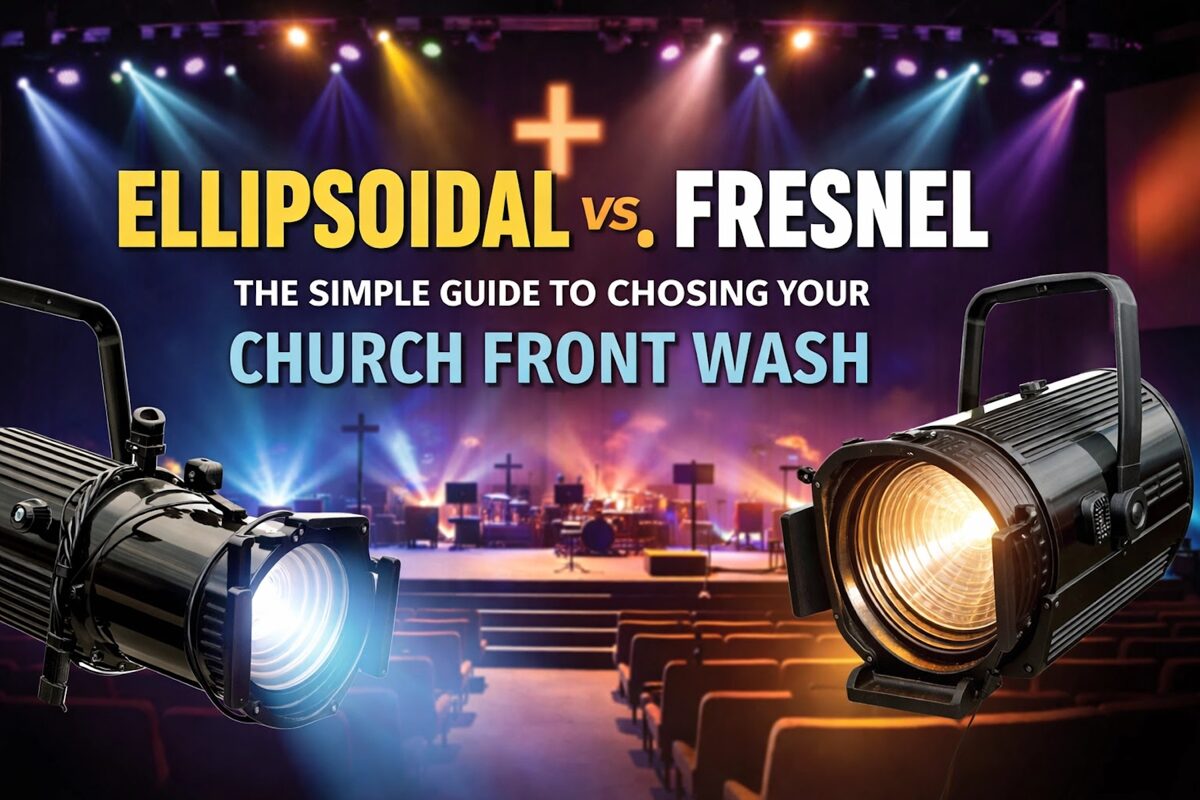
So you're trying to figure out the best way to light your stage for Sunday mornings. You've probably heard terms like "Fresnel" and "Ellipsoidal" thrown around, and honestly? It can feel like learning a new language.
Here's the good news: it's not as complicated as it sounds. By the end of this guide, you'll know exactly which fixture does what, when to use each one, and how to make your pastor (and your livestream viewers) look amazing.
Let's break it down.
Why Your Front Wash Actually Matters
Before we dive into the gear, let's talk about why this decision is so important in the first place.
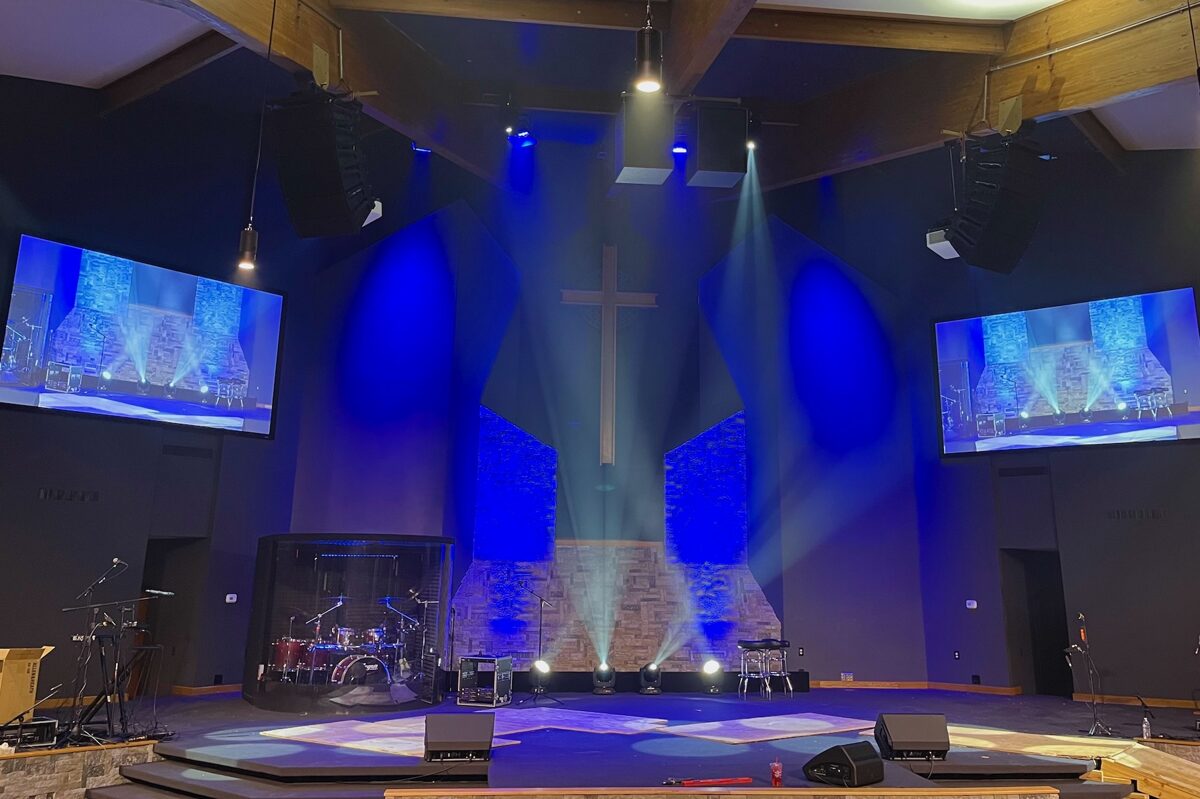
Your front wash is the main light hitting the people on your stage: your pastor, worship leader, and anyone else up front. Get it right, and everyone looks natural, professional, and easy to see both in the room and on camera. Get it wrong, and you end up with harsh shadows, washed-out faces, or that dreaded "floating head in darkness" look on your livestream.
The two most popular fixtures for front wash in churches are Fresnels and Ellipsoidals. They're both workhorses in the AVL world, but they do very different jobs. Let's meet them.
What Is a Fresnel?
A Fresnel (pronounced "fruh-NEL") is named after the French engineer who invented the lens style. You'll recognize it by its distinctive ridged glass lens on the front.
The superpower of a Fresnel is its soft, blended light.
When you turn on a Fresnel, you get a beam with soft edges that gradually fades out instead of cutting off sharply. This is huge when you're trying to light a large area evenly. If your pastor likes to pace back and forth across the platform (and let's be honest, most of them do), a Fresnel wash keeps them evenly lit no matter where they walk.
Key Features of Fresnels:
- Soft-edged beam that blends beautifully with other fixtures
- Consistent brightness from the center to the edge of the beam
- Adjustable beam angle (usually by moving the lamp closer or farther from the lens) Flattering, natural light that looks great on camera.
If you've ever watched a professional broadcast and noticed how the host looks evenly lit without harsh shadows, there's a good chance Fresnels were involved.
What Is an Ellipsoidal?
An Ellipsoidal (sometimes called an "Leko" or "Source Four" depending on the brand) is a completely different animal. It's the precision tool in your lighting arsenal.
The superpower of an Ellipsoidal is control.
Ellipsoidals produce a hard-edged, focused beam of light. They come with built-in shutters (those little metal blades inside the fixture) that let you shape the light exactly where you want it: and more importantly, keep it off the places you don't.
Got a projection screen behind your worship leader that keeps getting washed out by stage lights? An Ellipsoidal lets you cut the light right at the edge of the screen. Need to highlight just the drummer without spilling light onto the choir? Ellipsoidal.
Key Features of Ellipsoidals:
- Hard-edged, focused beam for precise lighting
- Shutters and framing blades to shape the light
- Gobo slot for projecting patterns, textures, or logos
- Long throw distance capability for lighting from far away
The Big Differences (In Plain English)
Let's put these two side by side so you can see how they compare:
Think of it this way: Fresnels are paintbrushes, Ellipsoidals are pencils. One covers broad strokes beautifully, the other gives you fine detail.
So Which One Should You Use for Front Wash?
Here's the straight answer: For most church front wash applications, Fresnels are the better choice.
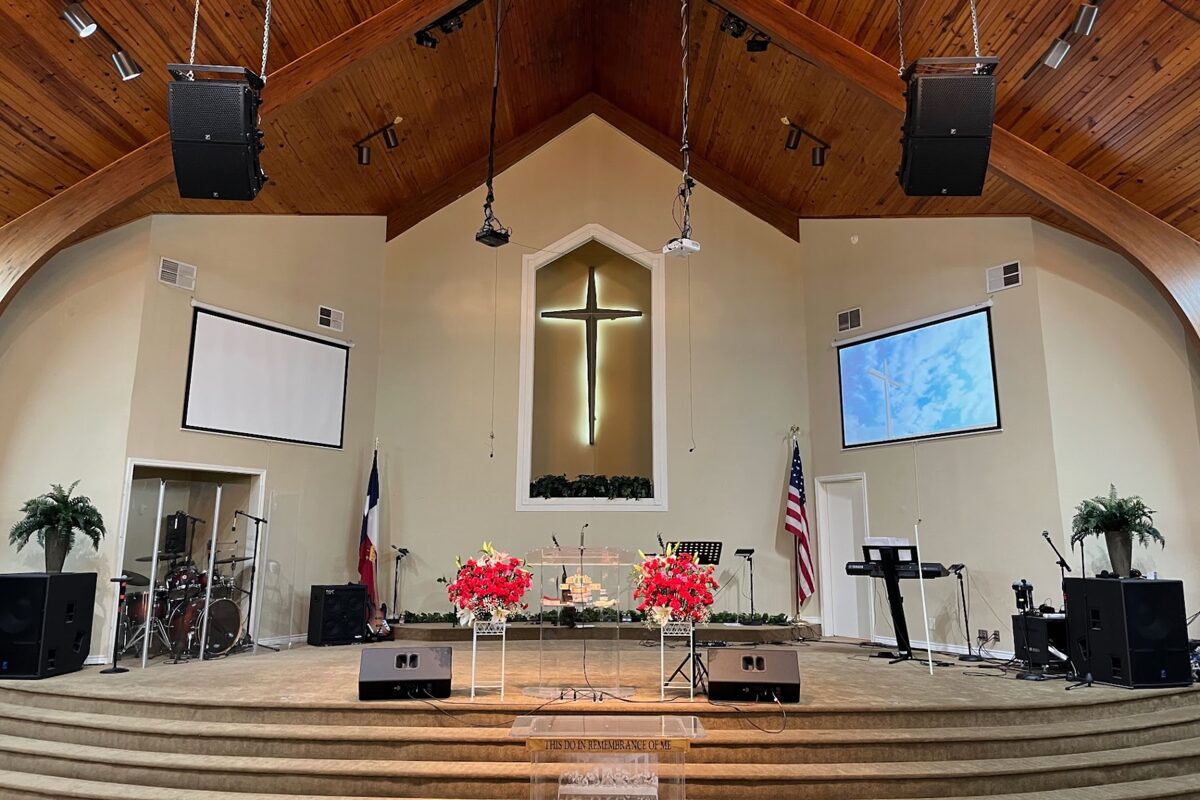
Why? Because front wash is all about even, flattering coverage across a large area. You want your entire platform lit consistently so that whoever is speaking or leading worship looks great no matter where they stand. Fresnels excel at this because their soft edges blend together seamlessly when you use multiple fixtures.
Ellipsoidals, on the other hand, can leave visible "pools" of light with dark spots between them if you're not careful. They're fantastic tools, but they shine (pun intended) in different applications.
Use Fresnels When:
- You need to light a platform or stage area evenly
- Your speaker or worship leader moves around a lot
- You want soft, natural-looking light for video
- Your volunteer team needs something simple to operate
Use Ellipsoidals When:
- You need to highlight a specific person (like a soloist)
- You want to keep light off your projection screens or LED walls
- You're projecting patterns or logos onto surfaces
- You need precise control over where the light falls
The Secret? Use Both Together
Here's what the pros do: they use both fixtures working together.
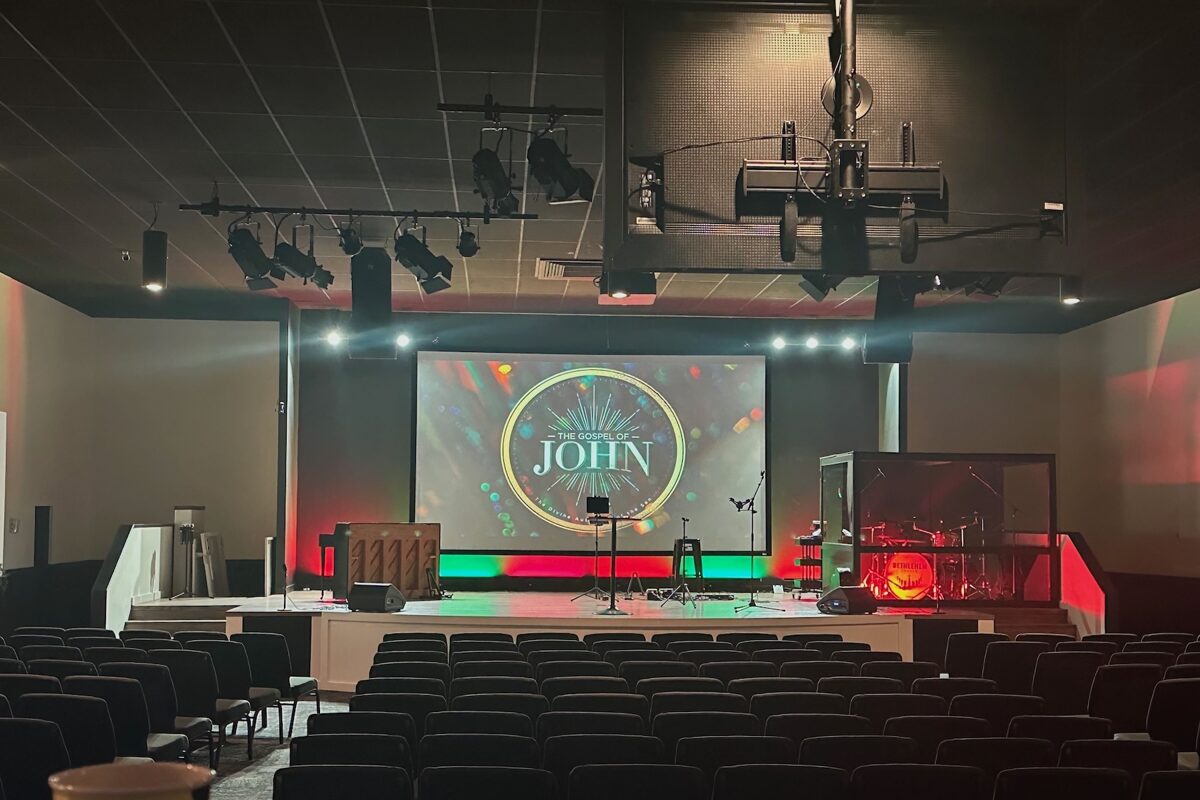
Fresnels handle the main front wash, creating that smooth, even coverage across the platform. Then Ellipsoidals come in as accent lights: highlighting the lead pastor during the sermon, spotlighting the worship leader during a solo, or adding texture with gobo patterns on the back wall.
This combination gives you the best of both worlds: the soft, blended coverage of Fresnels with the precise control of Ellipsoidals. It's how professional theaters, concert venues, and broadcast studios have been doing it for decades.
A Word About Volunteers and Livestreams
Let's talk about two things that matter a lot to churches: volunteer teams and camera quality.
Most churches don't have professional lighting techs running the board every Sunday. You've got dedicated volunteers who are juggling sound, slides, and lights all at once. That's why simplicity matters. Fresnels are about as straightforward as it gets: point them at the stage, adjust the beam width, and you're done.
For livestreams, you need lights that won't flicker on camera. Older fixtures (especially those running on dimmers) can cause a subtle flicker that's invisible to the eye but shows up horribly on video. Modern LED Fresnels and Ellipsoidals solve this problem completely. They're designed to be flicker-free at any frame rate, so your online viewers see smooth, professional video every single time.
At SM Lights, every fixture we sell is specifically chosen to be volunteer-friendly and camera-ready. We don't sell gear that requires a lighting degree to operate, and we don't sell anything that will make your livestream look like a strobe light party.
Quick Tips for Your Church Front Wash
Before you go shopping, here are a few practical tips:
- Start with your throw distance. How far is the lighting position from your stage? This determines how powerful your fixtures need to be.
- Count your zones. Divide your platform into sections. Most churches need at least 2-3 Fresnels to cover the main speaking area evenly.
- Think about color temperature. Match your front wash to your camera's settings (usually around 3200K for warm or 5600K for daylight).
- Don't forget the angle. Front wash works best at about 45 degrees from above. Too steep and you get raccoon eyes; too shallow and you blind your pastor.
- Budget for both. If you can only afford one type right now, start with Fresnels for your front wash. Add Ellipsoidals later for accent lighting.
Ready to Light Up Your Stage?
Choosing between Ellipsoidals and Fresnels doesn't have to be overwhelming. For your main front wash, Fresnels will almost always be your best friend. They're simple, they blend beautifully, and they make everyone on stage look fantastic: both in the room and on your livestream.
When you're ready to add more control and precision, bring in Ellipsoidals to spotlight key moments and keep light exactly where you want it.
Not sure what you need for your specific space? That's literally what we're here for. Reach out to the team at SM Lights, and we'll help you figure out the perfect setup for your church: no guesswork required.